
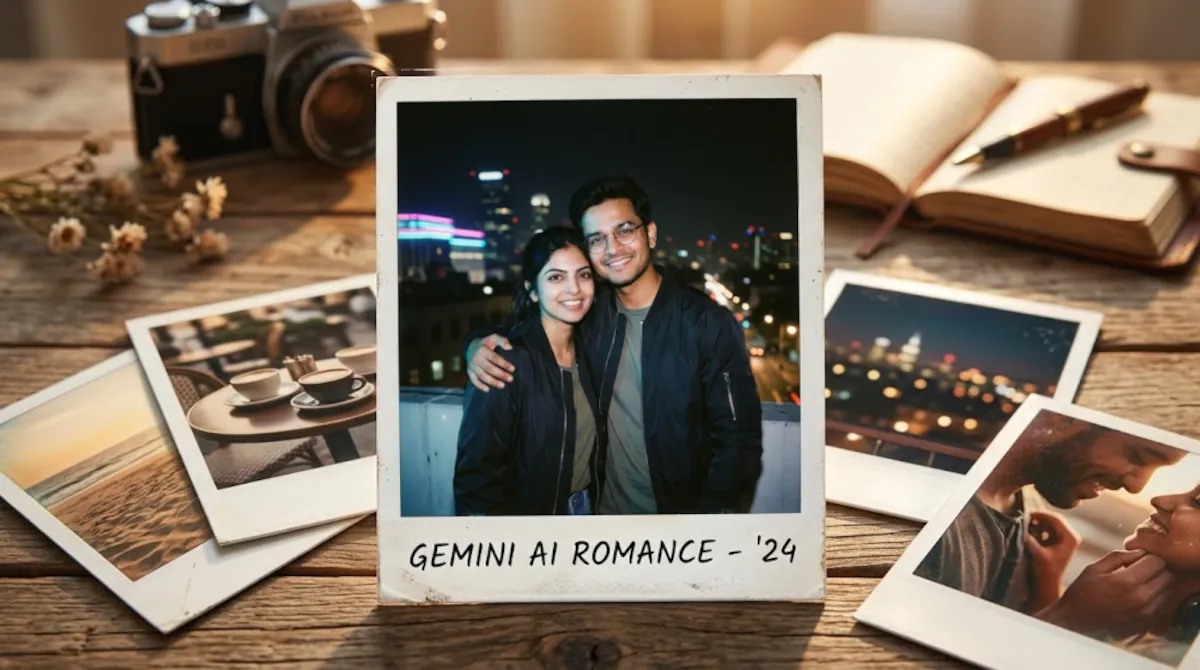
If you want to capture the raw, nostalgic magic of vintage photography, mastering the right polaroid couple prompt for Gemini is exactly where you need to start.
There’s something about a polaroid couple photo that hits differently. Not a posed studio shot. Not a perfectly lit portrait. Just two people, caught in a real moment, held inside a faded white frame that looks like it’s been tucked into a wallet for ten years.
That’s exactly what the right polaroid couple prompt for Gemini can give you. And this guide gives you everything you need: the prompts, the pose logic, the scene setups, and the small details that make a couple shot feel genuinely romantic rather than just aesthetically retro.
Why Couple Shots Need a Different Prompt Strategy
Single-subject polaroid prompts are forgiving. One face, one composition, one light source. Couple shots are fundamentally more complex, and that complexity is why most generic “polaroid prompts” fall apart when you upload two people.
Here’s what goes wrong most often:
The AI either flattens both subjects into the same brightness, losing the natural depth of two people in a frame, merges facial features if the two faces are close together, or generates awkward body contact: arms that don’t quite touch, hugs that look stiff, eye lines that don’t match. These aren’t random failures. They’re predictable ones, and you fix them at the prompt level, not in post-processing.
A polaroid couple prompt for Gemini needs to do three things that a solo prompt doesn’t: explicitly define the relationship between the two subjects, describe the type of physical interaction (not just “close together”), and give the AI a clear lighting anchor for two faces rather than one.
That’s the core difference. Everything in this guide is built around it.
The Foundation: What Every Couple Polaroid Prompt Must Include
Before you look at specific scene prompts, understand the base layer. Every single polaroid couple prompt for Gemini should contain these five elements:
1. A defined physical connection.
Don’t write “couple together.”
Specify:
“the man hugs the woman from behind,” or “both leaning in close, foreheads almost touching,” or “she rests her head on his shoulder as he looks at the camera.”
The more specific the pose, the more natural Gemini renders the body contact.
2. Explicit face preservation for both subjects.
Always write:
“do not change the faces of either person.”
Without this, Gemini may reinterpret facial features, especially on the person who appears smaller in the frame.
3. A single unified light source.
Two subjects can create conflicting light logic if you don’t anchor it. “Flash from the front, spread evenly across both faces” is your safe fallback.
4. A shared background element.
Give both subjects something to exist inside: a wall, a curtain, a beach at dusk, rather than just describing them in isolation. This anchors the composition.
5. The polaroid format cues. White border, thicker bottom margin, subtle film grain, warm faded tones. These are non-negotiable. Without them you get a vintage-style photo, not a polaroid one.
6 Ready-to-Use Polaroid Couple Prompts for Gemini
Each of these prompts is tuned for a specific setting and mood. Pick the one that fits your photo, paste it into Gemini alongside your uploaded images, and iterate from there.
1. The Beach at Golden Hour
This is the most universally romantic setting, and Gemini handles golden hour outdoor lighting exceptionally well. The warm tones of late-afternoon sun pair naturally with the warm bias of polaroid film chemistry.

Create a Polaroid-style photo of a couple on a beach at golden hour. Both are facing the camera with relaxed, candid expressions. She is leaning into him slightly. Their pose should feel natural, intimate, and unforced. Gentle wind movement in the hair.
They are dressed in casual beachwear with a soft, effortless look. Keep the styling simple and realistic. No over-styling or fashion editorial elements.
They are standing on a beach with soft warm sand and blurred ocean waves in the background. The scene should feel like a real memory, not a staged photoshoot. Include a white Polaroid border with a thicker bottom margin.
The setting sun casts a warm, slightly hazy front-facing glow across both faces. Use soft golden hour lighting with natural highlights and gentle shadows. Add subtle film grain, faded warm tones, and slight color bleeding around the edges.
Style it as a nostalgic analog instant photo. Make it feel spontaneous, emotional, and irreplaceable. Prioritize realism, softness, and authentic human presence. Do not change the faces of either person.
Shot on a vintage instant camera aesthetic. Slight softness, shallow depth of field, natural framing, and realistic imperfections.
Use the attached reference photo for facial identity and preserve exact proportions.
2. The Cozy Bedroom (Fairy Lights)
This is the aesthetic that dominates Pinterest boards and Instagram saves. Soft indoor light, matching cozy outfits, a moment that feels private and warm.
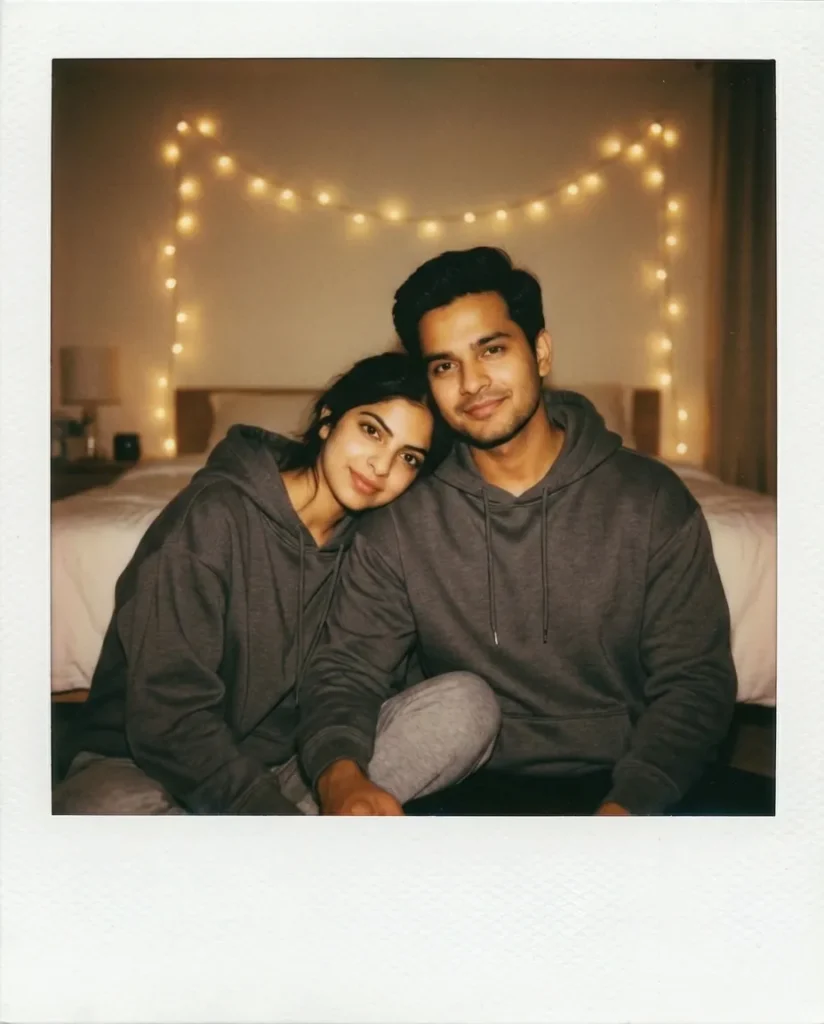
Create a Polaroid-style photo of a couple seated close together, both facing the camera with soft relaxed expressions, while one rests their head gently on the other’s shoulder. They are wearing matching oversized hoodies. The setting is a dimly lit bedroom with soft fairy lights draped across a warm beige wall in the background.
Camera flash lights both subjects from the front, creating gentle brightness against the darker room, with slight edge blur around the frame. Use warm vintage tones, soft film grain, and an intimate candid nostalgic mood. Add a white Polaroid border with a thick bottom margin. Shot like an instant film photograph with a casual authentic feel. 35mm lens, eye-level framing, centered composition, shallow depth of field. Use the attached reference photo for facial identity and preserve exact proportions.
3. The Café Table (Parisian / Quiet Romance)
This one is for images with a quieter, more cinematic energy. Coffee cups, a small table, soft diffused light. It channels the atmosphere of an old French film without being over the top.
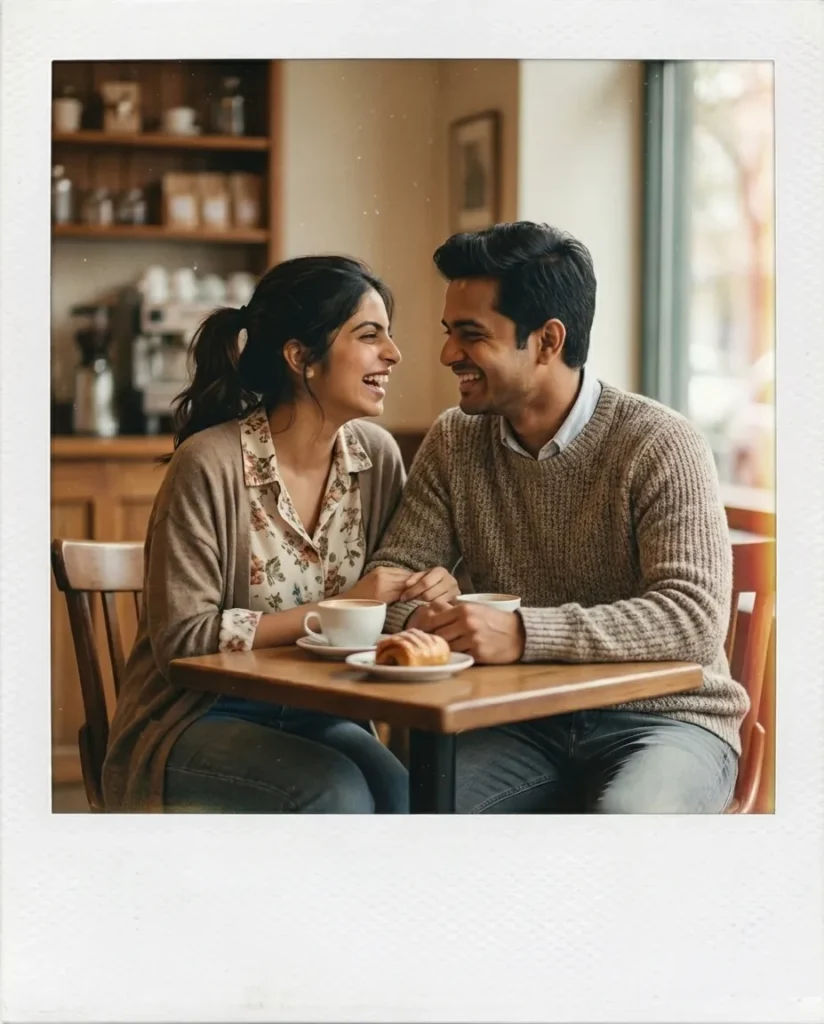
Generate a vintage Polaroid-style photo of a couple sitting at a small café table. One person leans toward the other across the table. Both are mid-laugh or looking at each other naturally, with a relaxed candid expression. Use the attached reference photo for facial identity and preserve exact proportions.
They are dressed in casual everyday café wear with natural styling. Keep the clothing simple, believable, and softly textured.
Place them inside a cozy café interior with muted warm tones. Add a softly blurred background with subtle tables, chairs, and ambient details. Frame the shot like it was captured from a nearby corner table, spontaneous and unposed. Include a white Polaroid border with a thicker bottom edge.
Use soft diffused indoor lighting with no harsh flash. Let a warm window glow fall gently from one side. Keep the light flattering, natural, and nostalgic.
Style it as a faded vintage instant film photograph. Add gentle film grain, a slightly washed nostalgic color palette, and a subtle light leak on one edge. The mood should feel intimate, warm, and real.
Shot on a 50mm lens. Slightly close framing. Eye-level angle. Shallow depth of field. Photorealistic. High detail.
4. The Night Rooftop (Urban Late-Night)
For couples who want something edgier, a little dark, a little spontaneous, shot against a blurred city skyline.
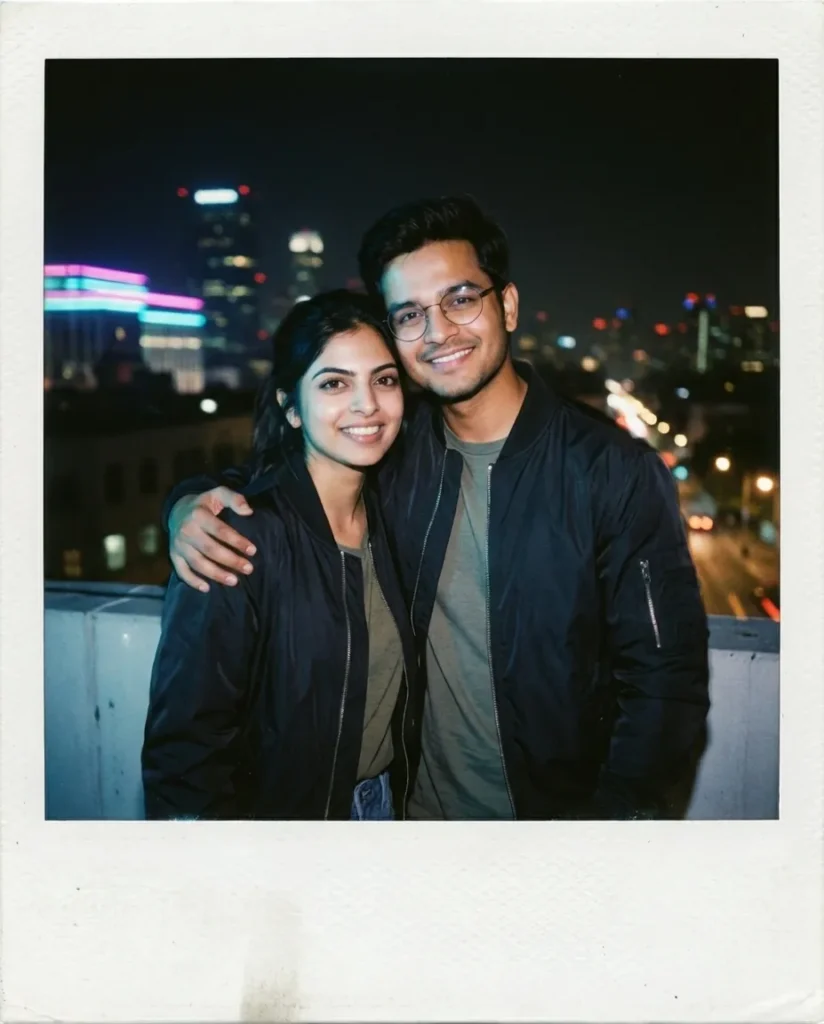
Create a Polaroid-style photo of a couple on a rooftop at night.
They stand close together with one arm around each other, relaxed and natural.
They wear matching bomber jackets with casual styling.
A city skyline fills the background with blurred neon bokeh and distant streetlights.
Direct flash from the front brightly illuminates both faces, while the background remains dark and grainy. Cool highlights from the flash mix with warm shadow tones.
Polaroid aesthetic with an imperfect, candid feel. White border with a thick bottom margin. Pronounced film grain. The mood feels spontaneous, adventurous, like a forgotten late-night memory.
Shot on a compact instant camera, 35mm equivalent lens, slight motion softness, high contrast. Use the attached reference photo for facial identity and preserve exact proportions.
5. The Forehead-to-Forehead (Intimate Close-Up)
Sometimes you want to fill the frame. No background story. Just two people, close, real.
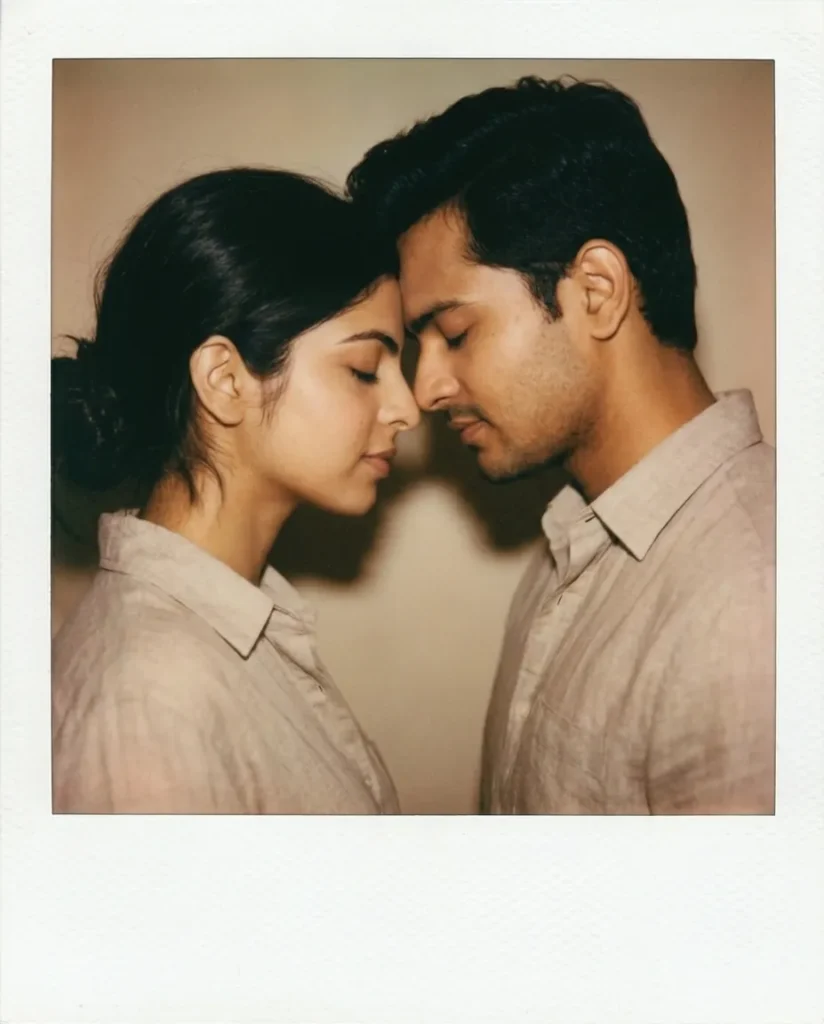
Create a Polaroid-style close-up portrait of a couple. Both subjects face each other with foreheads gently touching. Eyes closed or looking down softly.
They wear simple, casual clothing in neutral tones. No distracting patterns.
The environment is minimal. A slightly blurred warm neutral wall in the background.
Use a warm front flash to create a soft, even glow across both faces. Gentle shadows. Intimate lighting.
Polaroid style with a white frame and a thick bottom margin. Subtle film grain. Warm, slightly faded color tones. Quiet and emotionally raw mood.
Shot on a 50mm lens. Shallow depth of field. Centered framing.
Use the attached reference photo for facial identity and preserve exact proportions. Do not change the faces of either person.
6. The Stacked Stories Format (Instagram-Ready)
Three separate polaroid panels arranged vertically for Instagram Stories, each capturing a different moment in the same session.
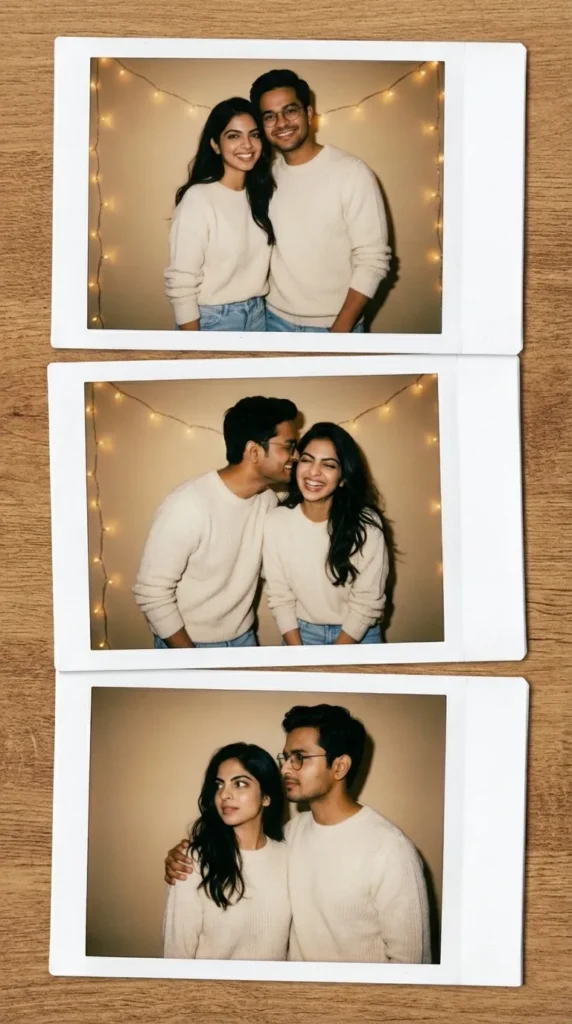
Generate a 1080×1920 vertical Instagram Stories composition with three stacked Polaroid photos featuring the same couple in all three frames. Use the attached reference photo for facial identity and preserve exact proportions. Keep both faces fully consistent across every panel and do not alter facial structure, skin tone, or recognizable features.
Panel 1: the couple standing close together, both smiling naturally at the camera with a relaxed and candid pose.
Panel 2: one person leaning in and whispering softly to the other, while the other laughs genuinely.
Panel 3: a side-angle candid shot, both looking away from the camera as if unaware they are being photographed.
They wear matching casual outfits in all three frames, coordinated but natural, with soft everyday styling.
The setting is indoors with a warm beige wall and subtle fairy lights glowing in the background. Keep the background cozy, minimal, and visually consistent across all three Polaroids.
Use direct front flash lighting spread evenly across both subjects in every frame. Keep the flash clean and nostalgic, with soft shadows and a slightly overexposed instant-camera feel.
Style it like authentic vintage Polaroid photography with warm tones, soft film grain, slight color fading, and a natural snapshot mood. Add realistic white Polaroid borders to each photo with thicker bottom margins. Stack the three prints vertically with slight natural spacing and a casual scrapbook-like arrangement.
Shot as if captured on an instant film camera, front-facing portrait framing, close to medium crop, realistic perspective, photorealistic, high detail.
Pose Language That Actually Works in Gemini
Gemini interprets pose instructions literally. So the words you use for body position matter more than you might expect. These phrases consistently produce better results:
- “hugs from behind” : produces a natural back-embrace without arm weirdness
- “leans into the other person” : creates organic closeness without merged faces
- “one resting their head on the other’s shoulder” : anchors the taller/shorter dynamic naturally
- “foreheads gently touching” : the most intimate pose that still keeps both faces readable
- “both facing the camera, bodies angled slightly toward each other” : the safe default when you’re not sure
Avoid vague instructions like “close together” or “hugging.” These are too open-ended and Gemini often defaults to awkward static poses with them.
Common Couple-Specific Problems (And How to Fix Them)
One face looks right, the other is off
This happens when one subject is smaller or partially obscured in the uploaded reference photo.
Fix: add following line at the beginning.
“both faces must be preserved with equal accuracy”
If one person’s face is particularly crucial, name them first in the pose description. Gemini tends to give priority to the first subject mentioned.
Arms or hands look unnatural
This is a known limitation of Gemini’s current image generation, especially with close body contact.
Fix: use the “hugs from behind” or “leans into” phrasing, which hides more of the arm geometry. Alternatively, ask for a closer crop:
“frame the shot from the shoulders up”
The lighting is uneven across two faces
If one face is brighter than the other, add:
“flash spread evenly across both subjects with no shadows on either face”
For outdoor shots, add:
“both in equal light, not one backlit”
The photo looks too sharp, not enough film feel
Push the grain harder:
“heavy, visible film grain throughout, textures consistent with ISO 800 vintage film”
Also add: “slight soft focus on edges of frame”. That reinforces the analog feel.
Outfits look mismatched or inconsistent with your uploads
If Gemini is changing the clothing, add:
“preserve outfits exactly as shown in uploaded reference photos”
For the matching outfit prompts specifically, describe the outfits in detail: color, style, material, so Gemini doesn’t improvise.
Adding a Date or Caption on the Bottom Border
This is one of the most requested couple polaroid details, writing a date or short note on that thick bottom margin, just like people used to do with a Sharpie.
Gemini can do it, but text rendering in images is still its weakest point. Here’s how to maximize your chances of legible text:
- Keep it to 4 words or fewer: “Add ‘Oct ’24’ in small handwritten script on the bottom white margin”
- Specify the style: “casual handwritten, slightly imperfect, black ink”
- Don’t try full sentences. It won’t work reliably.
For anything longer, generate the polaroid without text and add the caption in Canva or PicsArt afterward. Much cleaner result.
When to Upload Two Photos vs. One
Quick decision guide:
Upload two separate photos (one per person) when:
- the two people have never been photographed together
- you’re working from different selfies
- you want maximum control over face identity for each subject
Upload one existing photo of both people when:
- they’ve already been photographed together
- you want to transform the existing shot, not generate a new composition
Both workflows work in Gemini. But when using two separate upload photos, start your prompt with:
“Merge both uploaded reference photos into a single image. Do not change either face. Use these images only for face reference, do not carry over backgrounds, lighting, or outfits from the reference photos.”
This prevents Gemini from blending the two reference backgrounds into the final image, which is a common mistake that muddies the result.
One More Thing Worth Trying
Once you’ve got a polaroid you’re happy with, Gemini also supports turning it into a short animated clip. This is useful if you’re creating content for Instagram Reels or TikTok.
A simple motion prompt like:
“the couple leans in and hugs gently, subtle camera movement, vintage film flicker”
added to your polaroid image can bring the still frame to life.
It doesn’t always work perfectly, but when it does, the result is genuinely striking.
Wrapping Up
The difference between a generic vintage photo and a genuinely romantic polaroid couple prompt for Gemini comes down to specificity: in the pose, the light anchor, the face preservation language, and the polaroid format cues.
Get those five elements right, and Gemini handles the rest.
Start with the beach or bedroom prompts if you’re new to couple shots. Both are forgiving in terms of composition, and they consistently produce warm, emotionally resonant results on the first or second generation.
And if you haven’t already read the full polaroid formula breakdown, including ingredient-by-ingredient explanations and five single-subject prompts, check out our Ultimate Polaroid Prompt for Gemini (Nano Banana Technique) guide. It covers everything that makes the base formula work before you layer in the couple-specific complexity.